
How Much Does Concrete Removal Cost in Texas?
One national cost guide prices concrete removal at $2 to $6 per square foot, with labor and dumping fees included. A second national guide splits it by type. Unreinforced concrete runs $2 to $4 per square foot, and reinforced concrete with rebar runs $4 to $6. The first guide says most homeowners pay $542 to $1,744 for the whole job.
Those are market numbers from national cost guides, not our price list. On a real job, the size, thickness, steel and haul set the price of concrete removal. Small jobs also cost more per square foot than large ones, a third national guide notes.
Why is one national average $1,139 and another $1,856?
The first guide puts the national average at $1,139, based on 1,330 verified projects. The second guide gives a $500 to $5,000 range and a national average of $1,856. It says most homeowners pay around that to remove 600 square feet of concrete sidewalk.
The two averages describe different jobs. At $2 to $6 a square foot, 600 square feet alone comes to $1,200 to $3,600. The first guide’s figure averages its projects instead of one set job size. On large slabs, some contractors charge per ton instead of per square foot.
What does it cost to remove a driveway, slab or patio?
A third national guide prices common home projects one by one.
| Project | Average cost to remove |
|---|---|
| Concrete driveway | $1,200 to $4,500 |
| 10 by 10 foot slab | $300 to $800 |
| 20 by 20 foot patio | $1,200 to $3,000 |
| 50 foot sidewalk | $750 to $1,250 |
| 2-car garage floor | $1,000 to $3,500 |
Driveway prices vary with size and steel. A driveway also costs more to break up than a small slab, the guide says, because it takes an excavator. A patio costs more when it is attached to the house or has masonry built into it. Sidewalk prices rise past 6 inches thick, but most sidewalks are not reinforced, which cuts labor time.
An old foundation is a bigger job. The second guide puts its removal at $4,000 to $10,000, depending on size and reinforcement. If the house still stands on it, see what a house demolition costs in Texas.
What moves the price of concrete removal?
- Thickness. The first guide says contractors treat 4 to 6 inches as standard. Going even 1 or 2 inches past that can prompt contractors to double their price. Thicker concrete often has to be cut into smaller chunks before it can be hauled.
- Rebar. Rebar adds $1 to $3 per square foot in the third guide, for cutting and disposing of the steel. Reinforced concrete is also less likely to be recycled, so its disposal costs more.
- Access. Hard to reach, hazardous or steep spots often push the price to $6 per square foot or more. Thin sections a skid steer can lift out run as low as $2 a square foot.
- Disposal. Some contractors fold disposal into the per-square-foot rate. Others add $0.50 to $2 per square foot on top. Landfill dump fees run $90 to $160 per ton.
- Recycling. Disposal costs less when the concrete can be recycled, the second guide says. The first guide suggests asking about concrete recycling programs that offer lower rates.
- Haul distance. Extra mileage fees apply when the concrete has to travel farther to be dumped.
- Permits. Plan on $25 to $200 where a permit is required.
- What comes after. The guide rates cover labor and dumping. Ask whether filling and grading the ground afterward is in the quote.
How do you figure the volume and weight of a slab?
Multiply the square feet by the thickness in feet to get cubic feet. Divide by 27 for cubic yards. At 4 inches thick, one cubic yard of concrete covers 81 square feet.
A 20 by 20 foot patio at 4 inches is 133 cubic feet, or about 4.9 cubic yards. Weight matters, because landfill dump fees run by the ton. An EPA reference on concrete batching puts a typical cubic yard at 4,024 pounds, about 2 tons.
That patio weighs about 10 tons. At $90 to $160 a ton, the landfill bill alone would run about $900 to $1,600, which is why the recycling question matters.
When does an excavator beat a jackhammer?
Contractors break concrete with a jackhammer or an excavator, depending on its size and thickness, the third guide says. A hand crew with jackhammers suits a small patch or a spot no machine can reach. Breaking concrete is a difficult job, the second guide adds, and a rented jackhammer project takes many hours.
On a driveway or a thick or reinforced slab, a hydraulic breaker on an excavator does the breaking. Reinforced concrete is harder to cut, so heavy equipment usually lifts it out in large sections. That is how we break out driveways and slabs: the bucket and thumb load the pieces straight into a dump truck.
Why do slabs and driveways crack around San Antonio?
The Blackland Prairie runs from San Antonio north to the Red River. USDA researchers call its clays highly expansive: they shrink and swell as their moisture changes. Bexar County’s northern third is hilly, with soils over limestone. Below it, much of the county has gray to black cracking clays with a high shrink-swell potential.
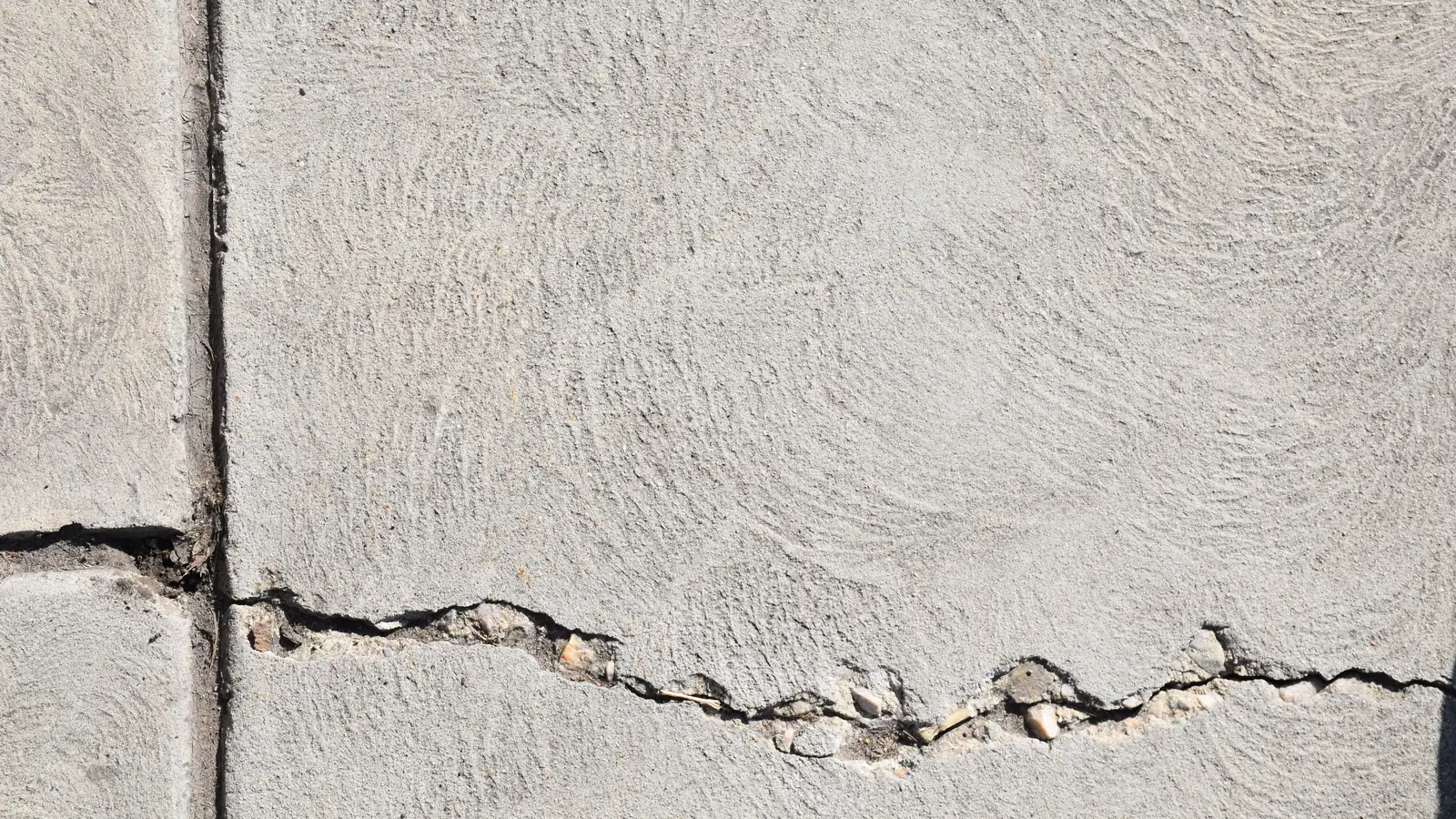
When that clay dries and shrinks, then swells after rain, the concrete on top moves with it. A national guide names settling, movement and climate as what eventually makes concrete crack and fail. With deep cracks or a sunken slab, the guide says removal is often the best option.
Do you need a permit to remove concrete in Texas?
It depends on the city and on where the concrete sits. A national guide says you need a permit when the concrete is in the public right of way.
In San Antonio, the city’s right-of-way rules require a permit to remove sidewalks, driveway approaches and curbs and gutters. The city’s sidewalk-curb permit covers only the public parkway between the property line and the street. Private flatwork that does not bear a load, have a cover or attach to a structure does not need the sidewalk-curb permit.
Universal City lists concrete flatwork, including slabs, patios, sidewalks and driveways, among the work that needs a city permit. Every city sets its own rules, so check with yours before a slab gets broken out.
Pulling footings can take the digging deeper. Texas law treats machine digging 16 inches or deeper as excavation, so a Texas 811 locate request comes first. The request goes in no earlier than 14 days and no later than 48 hours ahead. Weekends and holidays do not count.
What happens after the concrete comes out?
Broken concrete goes out by dump truck hauling to a landfill or a recycling site. Where footings came out, the trench gets filled and compacted. Then the ground gets graded so water runs off. A slab under a building that is coming down is part of demolition.
A concrete contractor pours anything new. Global Contractors LLC is based at our yard in Pleasanton, south of San Antonio. We work across San Antonio and about 50 miles around the city. We look at the slab first, then put the price in writing. Read how we handle concrete removal, then call (253) 606-9497 for a free estimate.