
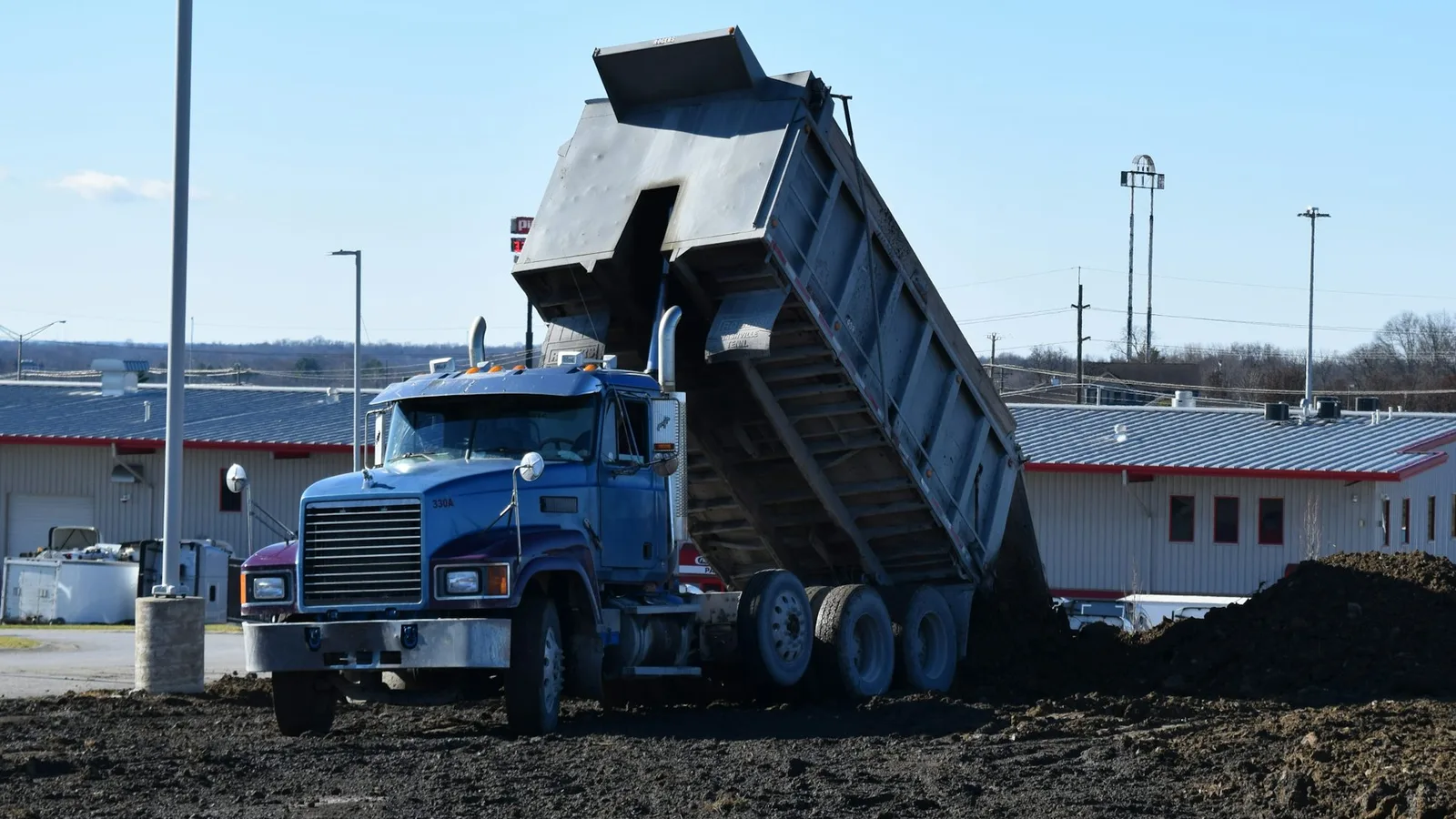
How Much Does Fill Dirt Cost in Texas?
One national cost guide prices fill dirt at $8 to $25 per cubic yard, depending on the type. A second national guide gives one wider band for all fill dirt: $5 to $30 per cubic yard. Most fill dirt projects run $344 to $1,339, and the full spread runs from $125 to $3,000.
Those are market numbers from national cost guides, not our price list. The first guide says project size, dirt type and delivery fees drive the spread. Some sellers roll fill dirt delivery into the per-yard price, and some list it on its own. Spreading and compacting can be a separate charge too.
What does fill dirt cost per cubic yard?
The type of fill sets the base price. The first guide prices each type separately.
| Fill type | Price per cubic yard |
|---|---|
| Unscreened fill | $8 to $15. |
| Mixed fill | $8 to $13. |
| Clean fill | $10 to $18. |
| Screened fill | $12 to $20. |
| Structural (engineered) fill | $15 to $25. |
| Specialty blends | $18 to $25. |
Unscreened fill still holds its rocks and debris, so it suits basic raising where precision is not critical. Screened fill is sifted and works best for landscaping and smooth finishes. Mixed fill costs less, but its debris or organic matter can cause unpredictable settling.
Structural fill is engineered for compaction and stability. The guide calls it the right choice under foundations or roads.
How much is a dump truck load of fill dirt?
The second guide sizes a dump truck load at 10 to 14 cubic yards. It puts a delivered truckload of fill dirt at $344 to $1,339 for most buyers.
The dirt itself is only part of that. At $8 to $25 a yard, the dirt in one load comes to $80 to $350. Anything above that on a delivered price is trucking, labor or fees. The first guide’s size ranges follow the same per-yard math.
| Order size | Published range |
|---|---|
| 5 cubic yards, a small hole | $40 to $125. |
| 20 cubic yards, leveling a yard | $160 to $500. |
| 60 cubic yards, large grading | $480 to $1,500. |
What does fill dirt delivery cost?
It depends on how the seller bills it. Some include delivery in the per-yard price. Others list it separately for loads up to 15 cubic yards, and some set a minimum order. Haulers without a set delivery fee may charge $65 to $100 per hour.
A delivery fee often covers one dump in a spot the truck can reach. The second guide ties that fee to a spot at least 15 feet from overhead trees, on solid, dry ground. Most crews drop the load at the curb or the driveway, and rough spreading costs extra.
What moves the price of fill dirt?
- Distance from the pit. Longer hauls and larger trucks cost more. A job far from the supplier can carry extra fees, and some companies add a fuel surcharge.
- Fill type. Structural fill and specialty blends sit at the top of the per-yard table.
- Quantity. Buying in bulk often lowers the per-yard rate. Small orders can run into a seller’s minimum.
- Access. Remote sites and hard-to-reach spots raise delivery charges. Labor costs rise with difficult access and steep slopes too.
- Spreading and compaction. The first guide lists labor for fill work at $50 to $150 per hour. A skid steer or compactor adds $100 to $300 per day unless the contractor includes it. Clearing and grading before the fill goes down adds $200 to $800, depending on the site.
How many cubic yards of fill dirt do you need?
Measure the length, width and depth of the area in feet. Multiply the three to get cubic feet, then divide by 27 for cubic yards. Change inches to feet first, so 6 inches deep is 0.5 feet.
Say you want to raise a 30 by 40 foot pad by one foot. That is 30 x 40 x 1, or 1,200 cubic feet. Divide by 27 and you get about 44 cubic yards. At 10 to 14 yards a load, that is four or five loads.
Round up, since loose fill packs down when it is compacted. A geotechnical report for a San Antonio apartment site puts numbers on it. Its loose lifts run up to 8 inches thick and compact to 6 inches.
One cubic yard covers 324 square feet an inch deep, or about 100 square feet at three inches. The same math sizes the fill for an old swimming pool, which our pool removal cost guide covers.
What is the difference between fill dirt, select fill and topsoil?
Topsoil is the top layer, with organic matter and minerals. It suits lawns and garden beds, but it settles or erodes over time. It is darker than fill dirt and costs more: $12 to $55 per cubic yard in the second guide.
Fill dirt sits below the topsoil layer and skips the organic matter, so it stays in place once compacted. It is the usual choice for filling holes and leveling grades. The apartment site report calls it general fill, for structures nobody lives in that can take some movement.
Select fill is fill made to a written spec. A geotechnical report in a City of San Antonio bid package spells one out. Imported select fill should be non-expansive, with a plasticity index between 8 and 20. It needs enough fines to bind together and no rocks or lumps over three inches.
Plasticity index is a lab test result. In a clay, a higher number generally means more potential to shrink and swell. Other specs set the band a little differently, so the report for your site is the one that counts.
Builders around San Antonio want select fill for a reason. The Blackland Prairie runs from San Antonio north to the Red River. USDA researchers who studied clay soils there call them highly expansive. Those clays shrink and swell as their moisture changes.
The apartment site report says foundations on swelling clay take large uplifting forces. One fix it lists is to dig out some of the clay and replace it with compacted select fill. Where the grade under a building has to come up, it calls for compacted select fill too.
Neither national guide prices select fill by name. Their closest line is structural fill, at $15 to $25 per cubic yard.
When should an excavation contractor spread and compact the fill?
A few yards for a small garden is a wheelbarrow job. A building pad or a driveway base is different. Fill dirt can settle or shift over time and leave low spots, cost guides warn.
On an engineered pad, the fill goes down in lifts. Each lift is compacted and tested before the next one goes on. The geotechnical report sets the lift thickness and the density target.
Our fill dirt delivery brings fill dirt and select fill in by the truckload. The trucks run across San Antonio and about 50 miles around the city. Spreading and grading a yard or acreage is dirt work. Building pads in compacted lifts is site preparation.
Global Contractors LLC is based at our yard in Pleasanton, south of San Antonio. We look at the site and the access, then put the price in writing. Call (253) 606-9497 for a free estimate.